ARTS

01 · SOR4D Final Report 2023-2026

Story

The ARTS report read as one continuous story. Every required SOR4D section unfolds here, enriched by the project's videos, photos and live indicators.

01

Context

The ARTS project unfolded in a Senegal going through a period of intense political turbulence. Between 2023 and 2024, the country experienced a tense electoral cycle, the imprisonment and then release of key political figures, demonstrations across major urban areas - including Bignona and Mbour which are central to the project - and finally, in March 2024, the arrival in office of a new regime led by former political prisoners and opposition leaders Bassirou Diomaye Faye (President) and Ousmane Sonko (Prime Minister).

The new government has put food sovereignty and the agroecological transition among its strategic priorities. Yet national agricultural policies continue to favour a modernised, productivist approach, as recent declarations from the Ministry of Agriculture suggest. For ARTS this context is both a window of opportunity - generating actionable knowledge for the early years of this administration - and a challenge: maintaining a long-term systemic transformation vision against short-term coping strategies imposed by economic pressure.

Civil society, through the DyTAEL (Dynamique pour une Transition Agroécologique Locale) and its national counterpart DyTAES, has continued to expand and decentralise its agenda. It is within this momentum that ARTS achieved most of its expected outcomes while opening new long-term perspectives - notably via the acquisition of two complementary initiatives funded by the Swiss National Science Foundation (SNSF) and the Liechtenstein Development Service (LED).

02

Impact

Contribute to the transition towards a more sustainable and just food system in Senegal

Agroecology in Senegal is gaining traction but remains fragmented. Isolated successes existed, yet they lack coordination, visibility, and political weight. Many initiatives operate in silos, disconnected from broader territorial dynamics. Advocacy efforts are limited, and policy change still remains insufficient to agroecological approaches.

In this context, the project claims that a meaningful agroecological transition requires a shift from the plot level to the territorial level. By embedding agroecology within territorial systems, linking actors, natural resources, governance frameworks, and social justice, it could become a lever for reducing poverty and systemic risk. This required not only technical innovation, but also new forms of collective action, institutional support, and narrative framing.

Since its launch, the project has contributed tangible outputs and systemic insights. A geo-referenced database of agroecological actors and initiatives for the project's two living labs was made publicly available. The project supported the establishment and capacity-building of multi-stakeholder platforms for agroecological transition (DyTAELs). These processes anchor agroecology in real-world governance and planning frameworks.

impact.food-insecurity

Reduced food insecurity

- / Long-term indicator, beyond project period.

Verification: National statistics (ANSD) and FAO/SISMAR food security barometers.

impact.atfs-replication

Partial

Adoption and replication of the ATFS approach

- / At least two active territories (Bignona + Mbour) with extension to other regions via DyTAES.

DyTAEL Bignona fully operational; DyTAEL Mbour being structured; outreach to national DyTAES.

Verification: Documents on new ATSF initiatives, DyTAEL Somone established.

03 · Outcome 1

Context-relevant pathways toward sustainable agri-food systems are co-designed based on an improved understanding of ATFS

Characterize, in two Senegalese territories, the levers and obstacles of a territorialized agroecological transition through diagnostics, mapping, analytical framework and participatory foresight.

Output 1.1

Territorial diagnosis in 2 living labs

Two distinct approaches: in Bignona, diagnostic structured by the 7 ATFS dimensions, 35 initiatives visited, transects, interviews. In Mbour, broader approach: 65 initiatives, literature review, multi-stakeholder workshops, sensitive photography (Serge Boulaz), cartoons (Odia), spatial analyses (large-scale land concessions).

1.1.maps-report

Partial

Land use maps and diagnostic reports

- / 2 maps, 1 report (revised into 1 unified report covering all 7 dimensions).

Bignona report finalized; Mbour report awaiting DyTAEL validation.

Verification: Copies of maps and GIS data, diagnostic report.

1.1.governance-report

Partial

Territorial governance analysis report

- / 1 report

Integrated into the unified diagnostic report covering all 7 dimensions.

Verification: Published report, presentation to DyTAEL.

On the ground · 3 events

Output 1.2

Comprehensive inventory of actors and initiatives

Mobile app Survey123 (ESRI), then migration to an open-source stack (Leaflet frontend, custom backend, dedicated mobile app) to hand the tool over to DyTAES and ensure sustainability beyond Unibe infrastructure.

1.2.initiatives

Exceeded

Agroecological initiatives documented in the database

100 / 50 initiatives(100%)

35 in Bignona, 65 in Mbour - target exceeded.

Verification: Digital copy of the database.

On the ground · 3 events

Output 1.3

ATFS framework including actionable transformative pathways

Systemic 7-dimension framework (productive base, work organization, livelihoods, resource tenure, value chains, territorial governance, sociocultural factors). Presented at SYAL (Portos 2022), refined through diagnostics, submitted for publication.

1.3.framework-article

In progress

Scientific article presenting the ATFS framework

- / 1 article

Article in progress, to be finalized in Y3.

Verification: Article published in peer-reviewed journal.

Read · 1 publication

Output 1.4

Development options and scenarios co-developed and assessed through scientific modeling and creative tools

Three complementary approaches: IPAR territorial foresight (Bignona, 3 five-day workshops, 72 variables, 3 scenarios to 2045); participatory forum theatre with Ka-Reng and Bignona DyTAEL (5 short co-written plays + 1 long-format play "Land that everyone covets"); transformative scenario-building in Mbour combining theatre techniques and creative facilitation.

1.4.scenarios

Exceeded

Foresight scenarios developed

3 / 2 scenarios(100%)

3 Bignona 2045 scenarios + 1 transformative scenario-building process in Mbour.

Verification: Bignona 2045 foresight report + Mbour transformative scenario-building.

1.4.theatre-forums

Exceeded

Forum theatre plays produced

11 / 2 plays(100%)

5 short plays × 2 DyTAEL + 1 long-format Bignona play ("Land that everyone covets") + 1 play by Mlomp women ("The fight of women for land").

Verification: Video captures of theatre forums.

1.4.videos

In progress

Videos produced linked to scenarios and theatre

1 / 2 videos(50%)

Kaddu Yaraax documentary in editing; theatre forum captures completed.

Verification: YouTube links, AgroVoices studio archive.

On the ground · 4 events

04 · Outcome 2

Increased synergies and effectiveness of collective action and territorial governance mechanisms in ATFS

Support for the co-creation and consolidation of DyTAELs - spaces of dialogue between citizens, researchers and authorities to build a joint vision and territorial action plans.

Output 2.1

Joint ATFS vision negotiated through deliberative platforms at national (DyTAES) and municipal (DyTAEL) levels

Progressive construction of a shared vision at the territorial level through workshops, diagnostics, foresight exercises and strategy sessions. National-level engagement via DyTAES and the national agroecology / organic agriculture strategy.

2.1.events

Exceeded

Events organized through deliberative platforms

8 / 5 workshops(100%)

Bignona foresight (3 five-day workshops) + Mbour scenario-building + launch workshops.

Verification: Workshop reports, photos, attendance lists.

Read · 1 publication

On the ground · 6 events

  • Workshop24-26 March 2026· Mbour

    Mbour Petite Côte DyTAEL structuring workshop

  • Workshop10 February 2026· Mbour

    Departmental Development Committee with Mbour Petite Côte DyTAEL

  • Workshop14 March 2024· Mbour

    Mbour DyTAEL launch workshop

  • WorkshopDecember 2023· Bignona

    ARTS project launch in Bignona

  • WorkshopDecember 2023· Bignona

    Bignona DyTAEL structuring workshop

  • WorkshopJune 2023

    ARTS launch workshop

Output 2.2

Action plans co-designed based on joint vision and transformative pathways

Beyond the formal deliverable (roadmap), the goal is to make plans more precise, less generic, and more strategic - capable of carrying argued policy positions grounded in diagnostic and foresight findings.

2.2.action-plans

Partial

Action plans validated by living labs

1 / 2 plans(50%)

Bignona validated; Mbour ongoing.

Verification: Copies of action plans.

On the ground · 10 events

Output 2.3

Open access online knowledge platform

Several components are in place (project website, YouTube channel, social media, interactive map, temporary Gardiennes du Vivant site for Dak'Art Biennale). Year 3: unify, improve navigation, develop interactive formats connecting written reports with multimedia. Ongoing reflection on post-project sustainability beyond Unibe infrastructure.

2.3.users

Unique users of the online platform

117 / 300 users(39%)

Verification: Platform URL, usage statistics.

05 · Outcome 3

Awareness and perception of agroecology have improved among consumers, media, producers and government agencies

Build a grounded advocacy strategy, produce scientific contributions, and deploy a wide range of artistic outputs to engage diverse audiences and shift public debate.

Output 3.1

Joint advocacy strategy

Strategy emerging from an integrated process of research, collective reflection and field engagement. Year 3 deepens the work under ENDA Pronat coordination: position papers, advocacy briefs, targeted channels. Continuity ensured post-project via Bey Diiwaan spin-off.

3.1.advocacy-strategy

In progress

DyTAES advocacy strategy co-developed

- / 1 strategy

Verification: Copies of strategy documents.

Read · 2 publications

On the ground · 4 events

Output 3.2

Contributions to scientific debates on ATFS

Articles, conference presentations, science-to-society panels. Not all written outputs follow conventional academic formats, but they are based on solid methodologies and feed deliberative processes.

3.2.articles

In progress

Articles published in peer-reviewed journals

2 / 5 articles(40%)

1 article submitted (Dakar Sustainable Food Systems), 1 article on forum theatre in draft, 3 others in early conceptual stage.

Verification: Copies of articles.

3.2.presentations

Reached

Participations in academic events

10 / 10 presentations(100%)

Over 10 presentations at major events in Senegal and Switzerland, including the 4th International Conference on Sustainable Intensification in Dakar.

Verification: Registration certificates, conference programs.

Read · 4 publications

  • Article · 2026

    Orchestrating agroecological transitions - emerging perspectives

  • Article · 2025

    Civil society in Senegal spearheads policy for agroecology

  • Article · 2024

    Agroecology on stage - bridging theatre and geography methods

  • Op-ed · 2024

    Agroecology and food systems - Grain de Sel no. 86

On the ground · 10 events

  • ConferenceApril 2026· National

    CID / JAES participation - Dakar

  • Conference25 November 2024· National

    Dak'Art Biennale - Roundtable "A feminist agroecology in action?"

  • Conference3-4 October 2024· International

    Lausanne Agroecology Day - Territorialised food systems

  • Talk1 October 2024· International

    Midi de Justice Sociale - PACTE Grenoble

  • Talk24 October 2024· International

    Seminar - Creative methods, undisciplined methods

  • Conference24-25 October 2024· International

    50th Swiss African Research Days

  • Talk2024· National

    CID Dakar - Motivation for agroecology

  • Talk2024· National

    CID Dakar - Agroecology series

  • Conference2024· National

    Conference on sustainable food systems

  • Talk4 June 2024· International

    International Colloquium: Geography, Gender and Territorial Development

Output 3.3

Artistic communication products

A space of experimentation where artistic and multimedia dimensions converge. Audiovisual studio operational, dedicated team (journalist + video technician + international collaborations). AgroVoices spin-off (SNF Agora funding) consolidates the approach.

3.3.report-article

Partial

Report + academic article on co-creative communication tools

1 / 2 productions(50%)

Report "Land that everyone covets" finalized; academic article in draft.

Verification: Copies of report and article.

3.3.videos

Exceeded

Videos co-produced with engaged ATFS actors

7 / 3 videos(100%)

3 Jambaars portraits + project presentation + cashew documentary + "De la plume à la voix" capsule + Lausanne Festival video.

Verification: YouTube links.

3.3.songs

Reached

Original songs produced

2 / 2 songs(100%)

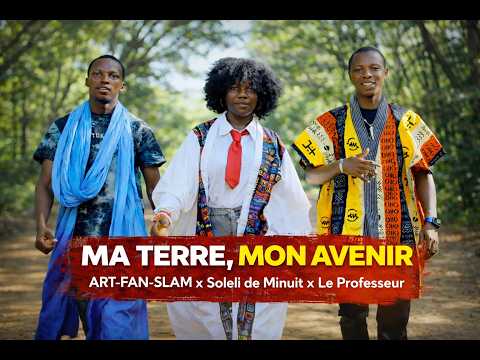
SEM BAY (The strength of Casamance agriculture) and WAT GAAL YËGOO (The Earth's cry), produced with Leuz Diwane G.

Verification: Audio links, social media references.

3.3.podcasts

Exceeded

Podcasts produced

5 / 3 podcasts(100%)

5 long-format episodes produced by AgroVoices.

Verification: Listening links.

3.3.forum-theatre

Exceeded

Forum theatre performances produced with video capture

11 / 3 forums(100%)

5 short plays × 2 DyTAEL + 1 long-format Bignona play + 1 Mlomp play.

Verification: Forum theatre reports and captures.

Read · 4 publications

On the ground · 9 events

  • Cultural event11 April 2026· Bignona

    Casa Urban Festival - Ziguinchor

  • Residency9-12 March 2026· Mbour

    Artistic residency with artists from the Mbour department

  • Residency21-23 July 2025· Bignona

    Artistic residency in Baïla

  • Workshop17-20 February 2025· Mbour

    Transformative scenario workshop - Mbour

  • Conference25 November 2024· National

    Dak'Art Biennale - Roundtable "A feminist agroecology in action?"

  • Cultural event4 October 2024· International

    Agroecology cultural day - Lausanne

  • Cultural event5 October 2024· International

    Agroecology festival - "Draw me agroecology" Lausanne

  • Cultural event2024· National

    30 years of Kaddu Yarax

  • WorkshopApril 2024· Mbour

    Writing and photo-elicitation workshops - Guéléwar Centre

06

Implementation activities and stakeholder engagement

The ARTS project is grounded in a transformative research approach, in which researchers are not positioned as external observers but participate directly in the dynamics of agroecological transition. Research agendas are co-designed - first within the consortium, and then with stakeholders through our close involvement in the DyTAEL platforms. These actor-led spaces serve as the main interface for structuring knowledge production and exchange in both territories.

Mechanisms for dissemination are embedded throughout the project. Research results are regularly shared with DyTAEL members and local stakeholders during workshops, restitutions, and strategy sessions. Some outputs are directly handed over to these actors, such as the georeferenced initiative mapping tool and database, as well as the territorial diagnostics and foresight reports. These resources are being used by the platforms to support local planning, dialogue, and action.

To ensure that potential beneficiaries can meaningfully engage with the research, we rely on inclusive, participatory co-creation tools. The theatre forum method is a powerful example. It brings together farmers, women, youth, and local leaders not just to react to findings, but to co-create stories and scenarios that reflect their realities. These performances serve both as a space for dialogue and a medium for communicating complexity in accessible ways.

Popular media engagement through local and national press, television, and radio has further increased visibility. We are now working to translate research findings into concrete positioning papers that will help DyTAEL platforms sharpen their advocacy.

SOR4D engagement tables

People and organisations reached

Final beneficiaries

Number of final beneficiaries reached by the solutions developed, segregated by gender.

2023-242024-252025-26
Total -359-
Male -265-
Female -94-

Researchers and practitioners involved

Segregated by gender and region (North/South).

2023-242024-252025-26
Researchers
Male -4-
Female -4-
North -3-
South -5-
Practitioners
Male -6-
Female -3-
North -1-
South -8-

Findings/solutions validated by users/beneficiaries

  • 2023-24 -
  • 2024-25 1 territorial foresight, 1 scenario-building, 3 theatre forums, 2 interactive maps, 2 territorial diagnostics
  • 2025-26 -

Scaling and collaborations

Organisations engaged for scaling, products considered, new collaborations, spin-offs.

2023-242024-252025-26
Organisations engaged in scaling ---
Products presented for scaling / replication ---
New institutional collaborations ---
Spin-offs · follow-up projects -3-

07

Challenges and opportunities

Challenges. The diagnostic phase took longer than expected - due to the complexity of the transdisciplinary ATFS framework and the initial underestimation of research assistants needed. We secured additional resources and found creative ways to expand the team and expedite this phase. The pre-electoral turbulence also required postponing several field activities and multi-stakeholder events.

On communication, despite a growing volume of high-quality content and many more outputs expected in Year 3, we still lack an effective communication strategy to ensure visibility and uptake. Many materials remain underexploited. Closing that gap by building a focused strategy connecting our content with the right audiences and platforms is a Year 3 priority.

Opportunities. The rise of a new government with a reformative agenda represents a key opportunity. Our contributions to the National Strategy for Agroecology and Organic Agriculture in Senegal, through territorial consultations, open a direct channel for living-lab lessons to flow up to the national level. Several spin-offs have already been acquired:

  • AgroVoices SNF Agora · GIUB

    Agroecology multimedia studio, podcasts and audiovisual productions with award-winning Senegalese and Swiss filmmakers.

  • Bey Diiwaan -

    Advocacy spin-off ensuring continuity of agroecological advocacy strategy beyond the ARTS project.

  • AgroAI -

    Artificial intelligence project for territorial agroecology.

08

Research partnership

The project was co-designed through long and intensive discussions among all partners, involving extensive bilateral and inclusive online work sessions, multiple validation rounds of the project document (which was first written in French to allow everyone's contribution), and a joint presentation to the selection committee. The project is designed to maintain some level of flexibility to allow multi-stakeholder processes to influence the research agenda post-project start.

Project partners ENDA PRONAT and IPAR are deeply engaged with food system stakeholders at various levels. With the GIUB team's significant presence in Senegal - where two of three scientists reside nearly full-time - we ensure ongoing stakeholder interaction from all project partners.

Responsibilities are clearly defined and organized into work packages led by respective partners, fostering a collaborative approach. Data collection and analysis primarily support the collective actions of stakeholders in the transition process, making findings accessible (within confidentiality limits) in open access. Results extend beyond academic publications, reaching the public via multimedia, artistic outputs, policy discussions, and collective actions.

To ensure sustainability, we have been actively seeking additional funding opportunities and collaborating with local researchers, activists, and practitioners to establish CREATES - a research, education, and action center focused on socioecological transition based in the Mbour living lab.

09

Recommendations follow-up

Section to be completed with the SOR4D panel's recommendations following the Y2 report and how they have been taken into account in Year 3.

10

Communication

ARTS communication activities are described in detail in the dedicated sections of this site: Videos, Theatre, and Publications.

Highlights include: the Jambaars of Agroecology portraits, the 5-episode long-format podcast series produced by AgroVoices, the national photo competition Les Gardiennes du Vivant at the Dak'Art Biennale, the forum theatre play Terre de toutes les convoitises touring regional festivals, and the project's presence at the Lausanne festival.

11 · Annex

Logframe

The complete project logframe - Impact, Outcomes, Outputs, all indicators and means of verification, updated year by year - is presented on a dedicated page:

View the complete logframe →