Field
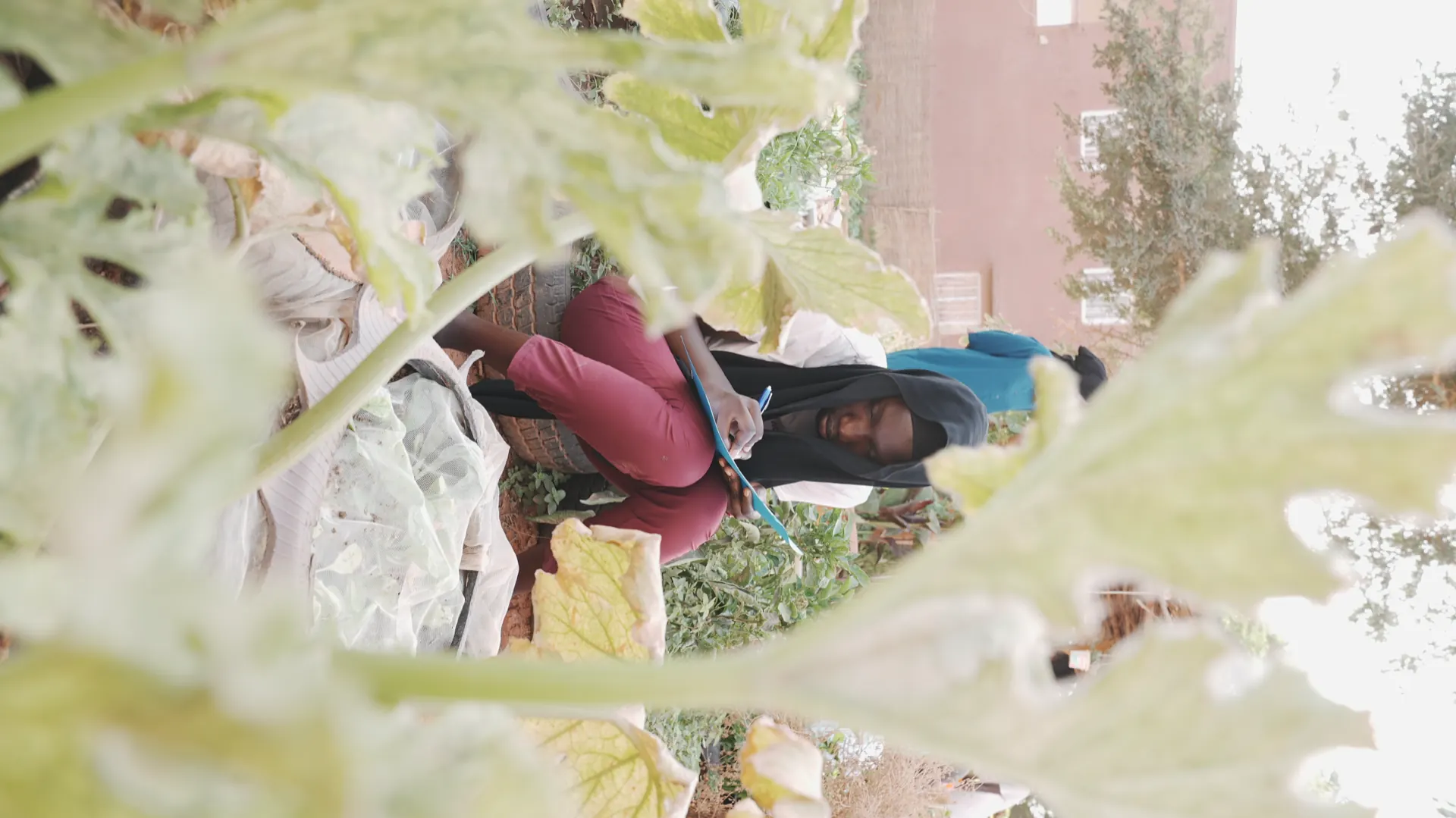
- 64 agroecological initiatives visited
- 20 in-depth case studies
- 40 SAAT questionnaires
- Semi-structured interviews
- Multi-stakeholder workshops and forum theatre
- Participatory mapping
Mbour, Petite-Côte · February 2026
Agroecology-based territorialised food systems in the Mbour department. 64 initiatives visited, 20 case studies, 7 SAAT analysis axes.
64
Initiatives visited
20
Case studies
191,121
ha studied
935,000
Inhabitants
13
Municipalities
Methodology
Three pillars woven together: dense field work, a 7-axis SAAT analytical grid, and a territory laid out in its numbers.
Field
Analysis
Territory
Interactive geoportal
All map layers, sources and underlying datasets, open for free exploration.
Context
The Dakar-Thiès-Mbour triangle concentrates 29 % of national food demand. The motorway (2019), the AIBD airport (2017) and the future Ndayane port are turning this territory into a peri-urban extension of Dakar.
Soils and land grabbing
Structurally dependent on irrigation. The 25 % of fertile soils are the first targeted by agribusiness.
70%
Easy to mechanise, poor water and nutrient retention. Unproductive without irrigation.
25%
Better natural fertility and water retention. Most coveted by agribusiness.
5%
Refuge soils for family market gardening. Marginal area, eaten away by urbanisation.
25 % of soils are fertile. They are the first to be grabbed. Zero agricultural protection zoning.
Land cover 2010-2020
Sources: ANAT, CSE, ANSD 2020. Mbour department (191,121 ha).
All that grows is tied to artificialisation. All that shrinks is a natural space.
Territorial governance
64 % of initiatives have never heard of the DyTAEL. Agroecological governance is not yet in place.
DyTAEL awareness
Distribution of decision-making power
7 DyTAEL functions to activate
Innovative tools deployed
Participatory mapping
Three localities (Tchicky, Thiafoura, Sandiara): local knowledge integrated into GIS, returned to village committees.
Forum theatre
Generational and gender conflicts brought into dialogue, equitable speech spaces created.
Transformative scenario building
Projection into desirable or undesirable futures, co-construction of pathways.
Polarisation
Coastal fringe under pressure, inland agribusiness front, rainfed hinterland.
Coastal fringe
Inland front
Deep interior
Pressure does not stay on the coast. Sandiara shows that agribusiness moves inland as soon as land allows.
Agribusiness
Growth and land grabbing on a backdrop of chronic water stress.
+85 %
irrigated areas (1,144 → 2,116 ha between 2010 and 2020)
~30
farms of 50 to 400 ha
350 ha
Produmel (Spain): export melon at Nguéniène
-12 m
water table since the 1960s - aquifer salinisation (+85 % salt flats)
Without water, we cannot do anything. The community borehole was taken over by a company that grows melons for export...
Impacts on the territory
Massive draws on an already deficit aquifer. Direct competition with domestic and peasant uses.
Municipal deliberations diverted. Pastoral corridors cut. Village lands encircled by farms.
Precarious seasonal wage labour, no social protection. Heavy pesticide use near homes and water points.
Zero local food benefit. Value added captured by foreign operators (Spain, China, Netherlands).
Inputs vs agroecology
734 tonnes of chemical fertilizers delivered in Mbour. Only 20 % of planned peanut seeds were delivered. Agroecology remains very poorly funded.
What the State funds
734
tonnes of fertilizer (1/3 of the entire Thiès region)
What agroecology gets
20%
20 % of planned peanut seeds actually delivered (2022-2023 campaign)
Can we claim to support agroecology while subsidising 734 tonnes of chemical fertilizers and delivering only 20 % of promised seeds?
Value chains
Three circuits, three problems, three levers for change.
Three circuits, three problems
Local markets - no bio/conventional differentiation, middlemen capture value
Flows to Dakar (29 % of national demand) - degraded rural tracks, transport costs, dependence on wholesalers
Export (melon, green bean, mango) - unsold dumped on local markets at rock-bottom prices, ruining small producers
Import dependence: Rice (Vietnam, Thailand), powdered milk, vegetable oil, frozen chickens at prices that beat any local competition.
Three levers
Lever 1
Saly hotels and restaurants want local, traceable produce. Ecotourism willing to pay. Public collective catering (canteens, hospitals): embryonic but huge potential.
Lever 2
Dialaw bio market (weekly, Ferme des 4 Chemins). Peasant baskets (AMAP model). Roadside sales on the Dakar-Mbour axis.
Lever 3
Bio Label: high cost, limited accessibility, external audit, admin language. PGS: low cost, wide accessibility, social oversight, local languages.
Labour organisation
Women perform much of the agroecological work, with limited access to credit and land.
Women - what they do
73 %
of agroecological workforce
70-80 %
of agricultural labour
5 000+
fish processors
What they get
Youth
50 %
of the population is under 20
15 %
of young farmers access formal credit
140/150 000
beneficiaries of the Agri-Jeunes Tekki Ndawni programme
Precarious wage labour
2 500 - 3 000 FCFA/jour
no social protection, often seasonal. Former peasants become farm labourers on the very lands they used to cultivate.
73 % of the workforce, less than 10 % of credit, zero land title. Women's labour funds the transition without benefiting from it.
Livelihoods
13 % of rural people access formal credit - three times less than the national average.
13%
Rural Mbour
39.8%
National average
Structural obstacles
95 %
of land has no formal title - no banking collateral
0
public budget line dedicated to agroecology
15,6 %
of initiatives master production + processing + sales
0 %
of farms keep accounting books
Innovations that work
68 households stored 38 tonnes of millet and got 3 M FCFA of credit at 12 % (vs 50-100 % in informal circuits).
Mlouma: 75,000 users (online agricultural exchange). BaySeddo: 125 M FCFA mobilised through agricultural crowdfunding.
809 certified producers, 664 t of products marketed, 453 M FCFA in value.
Climate risk coverage based on weather indices, 50 % subsidised by the State.
13 % credit access, zero farm accounting, zero agroecology budget. The tools exist; the scaling does not.
Sociocultural factors
Millet recedes as imported rice advances. Agroecology cannot be an imported model: it must build on existing knowledge.
Vernacular
Technical / NGO
Peasant seeds, better adapted to local conditions, struggle for recognition. Two models coexist: one capitalist, the other built on resilience.
Three threatened knowledge systems
Sereer
Practice: Fallow/millet rotation, crop-livestock integration, collective land management
→ Threat: Fallows gone, cycles broken, youth exodus
Lebou
Practice: Fishing calendars, biological rest, preservation (kethiakh, guedj)
→ Threat: Industrial overfishing, fishmeal plants, coastal erosion
Fula
Practice: Regulated transhumance, knowledge of pastures and water points
→ Threat: Corridors closed, water points privatised, land-use conflicts
Identity as a lever
Synthesis
Four locks identified. None of them lifts without coordination.
1/13
municipality plans
Speculation, no SCADT, weakened customary rights, privatisation of the commons.
+85 %
irrigated areas
Competition between agriculture, tourism and industry; aquifer salinisation.
70 %
no network
70 % of initiatives off-network, 64 % do not know about the DyTAEL, no accessible certification.
0
food impact study
Sectoral planning, disconnected mega-projects, women excluded from decisions.
Projection
Without coordinated action
With agroecological transition
Call
The DyTAEL is ready to coordinate. The territory is waiting for a political signal.
01
Municipal SCADT with protected agricultural zones. Strengthen land commissions with producers.
02
Rehabilitate water infrastructure. Economical irrigation. Collective management (ASUFOR).
03
Peasant markets, territorial PGS, shared processing and storage infrastructure.
04
Land and credit access for women. Adapted training for youth. Equity in governance.
05
Local clauses in SEZs. Mandatory food impact studies for structural projects.
06
Document threatened local knowledge. School food education. General public awareness.
Sources and references
Quantitative data
ANSD
General census, demographic projections 2013-2023
CSE
Land cover 2010-2020, satellite imagery
WorldPop
Spatially disaggregated population densities (2024)
ANAT
Territorial planning, zoning
DRDR Thiès
Mineral fertilizers, 2018-2019 campaign
DAPSA
Subsidised seeds, 2022-2023 campaign
FAO / CRODT
Fisheries statistics, catches
Field data
AE initiatives survey
64 initiatives visited, SAAT questionnaire (n=40), 2024
Case studies
20 in-depth studies (semi-structured interviews), 2024
Participatory mapping
Multi-stakeholder workshops, Sandiara and Sindia, 2025
Forum theatre
Community restitution and validation, 2025
Expert interviews
Technical services, elected officials, peasant leaders, 2024-2025
Institutional framework
LOASP (2004)
Agro-sylvo-pastoral orientation law
Forest Code (2018)
Classified forests and declassification regime
Decentralisation Act III
Devolution of powers, municipal SCADT
AE Strategy (MAER, 2023)
National agroecology strategy
SEZ (APIX)
Special economic zones, exemption regime
Citation: DyTAEL MBOUR, 2026, Territorial Diagnostic of Agroecology-Based Territorialised Food Systems. Mbour Department - Petite-Côte. ARTS-SOR4D project, SNSF / SDC.
Coordination: University of Bern, IPAR, ENDA Pronat, DyTAES. Funding: Swiss National Science Foundation / Swiss Agency for Development and Cooperation.
Continue
All cartographic layers, sources and raw data behind the diagnostic, open for exploration.
From diagnostic to foresight: 3 days, 5 thematic groups, 5 forum theatre pieces, one shared 2050 vision.
Interactive map of the 100 agroecological initiatives mapped across Bignona and Mbour.